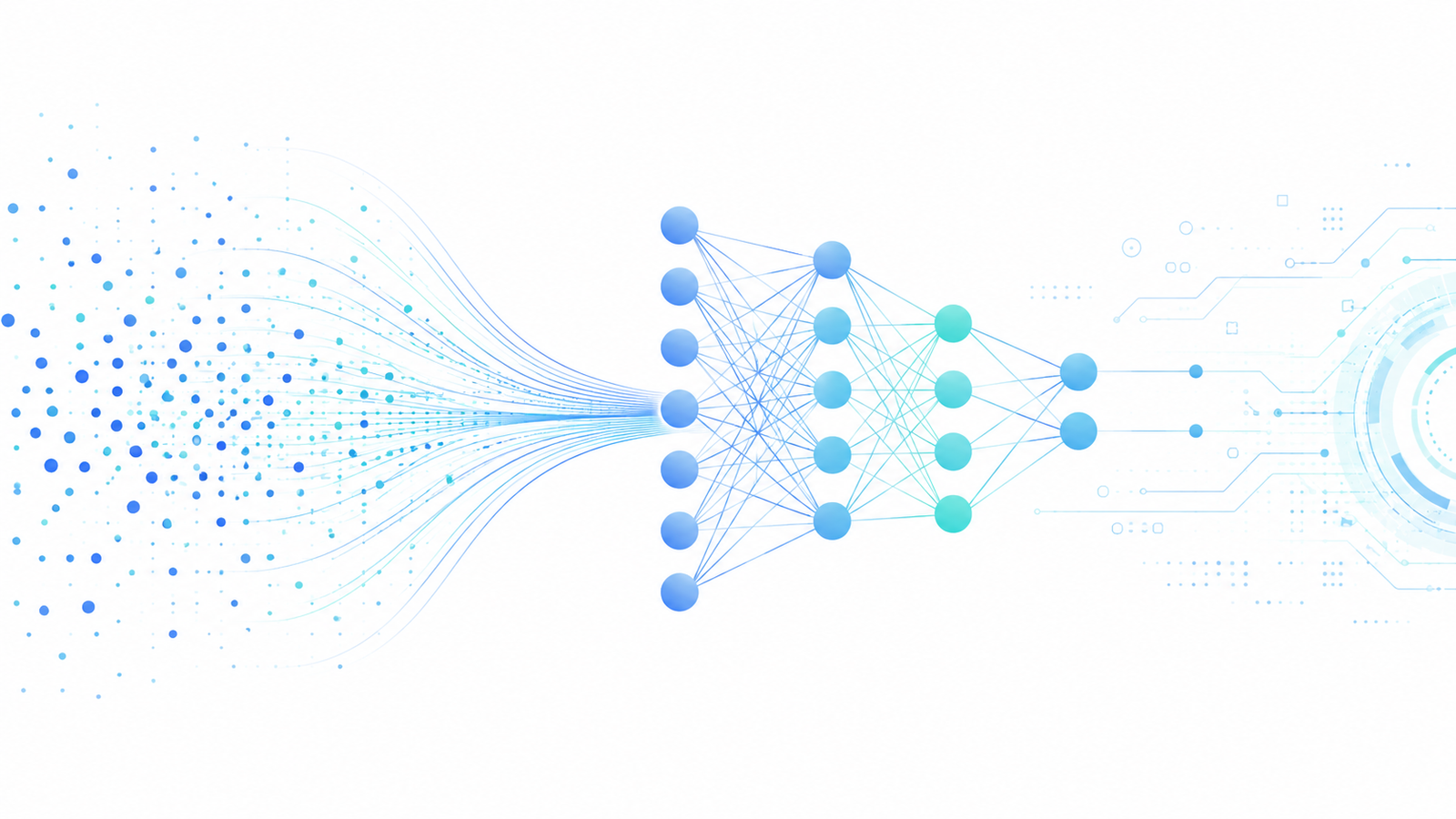
Machine Learning Explained
Machine learning is transforming the way we interact with technology. It powers everything from virtual assistants to recommendation systems.
But what exactly is machine learning? How does it relate to artificial intelligence?
This article will break down the basics of machine learning. We’ll explore its core concepts and techniques.
You’ll learn about different types of machine learning, including supervised and unsupervised learning.
By the end, you’ll understand how machine learning is shaping industries and what the future holds.

What Is Machine Learning? Understanding the Basics
Machine learning is a subset of artificial intelligence (AI). It involves creating systems that learn from data. These systems improve automatically without human intervention.
At its core, machine learning revolves around three main elements: data, algorithms, and learning models. Data serves as the foundation upon which models are built. Algorithms process this data to identify patterns or predict outcomes.
Machine learning can be broken down into specific learning types and techniques. The primary types include supervised, unsupervised, and reinforcement learning. Each type has unique methods and applications in the real world.
Key aspects of machine learning include:
- Labeled data for training.
- Pattern recognition.
- Predictive analytics.
Understanding these basics offers a glimpse into why machine learning is so powerful. From diagnosing diseases to personalizing customer experiences, its applications are vast.

AI and ML: How Are They Related?
Artificial Intelligence (AI) is a broad field that includes many technologies aimed at mimicking human intelligence. Machine learning (ML) is a critical part of AI. It focuses on enabling machines to learn from data and improve their performance over time.
AI can be seen as the umbrella under which ML resides. While AI encompasses various techniques like rule-based systems and natural language processing, ML specifically deals with data-driven learning. This specific approach allows machines to discover patterns and make informed decisions.
The relationship between AI and ML can be summarized as follows:
- AI covers various intelligent technologies.
- ML is a specialized branch of AI.
- ML emphasizes learning from data.
Understanding this relationship helps clarify the interconnected nature of these technologies. Together, AI and ML drive innovations across various industries. They are reshaping how we interact with technology today.

by BoliviaInteligente (https://unsplash.com/@boliviainteligente)
Key Types of Machine Learning
Machine learning comes in different types, each with unique characteristics. The three main types are supervised, unsupervised, and reinforcement learning. Each plays a distinct role in how machines learn from data and make decisions.
Supervised learning involves training models using labeled datasets. This means the data includes input-output pairs, making it easier for algorithms to learn the relationship. It’s widely used in regression and classification tasks, such as predicting house prices or classifying emails.
Unsupervised learning, on the other hand, deals with unlabeled data. The goal is to identify patterns and group similar data points. Common applications include market segmentation and anomaly detection.
Reinforcement learning involves learning optimal behavior through trial and error. Models receive feedback in the form of rewards or penalties. This type is crucial for tasks requiring decision-making in dynamic environments.
Here’s a quick overview of these types:
- Supervised Learning: Uses labeled datasets.
- Unsupervised Learning: Deals with unlabeled datasets.
- Reinforcement Learning: Learns by trial and error.
These key types form the backbone of machine learning applications. Understanding them is crucial for grasping machine learning’s vast potential.

by kenny cheng (https://unsplash.com/@kenny161616)
Supervised Learning
Supervised learning requires labeled data, meaning input-output pairs are available for learning. This approach involves training a model to predict the output from the given input. It’s the most common type due to its simplicity and effectiveness.
In supervised learning, models undergo training using known datasets. They then adjust their parameters to minimize the error between predicted and actual outcomes. This method works well for tasks like spam detection and image classification.
Key characteristics of supervised learning include:
- Uses labeled datasets.
- Ideal for regression and classification tasks.
- Requires predicting outcomes based on inputs.
Unsupervised Learning
Unsupervised learning works without labeled data. Its primary goal is to find hidden patterns or groupings in the data. It’s particularly useful where labels are hard to define or unavailable.
Models in unsupervised learning discover structure by analyzing the input data. They often use clustering or dimensionality reduction techniques. Applications include customer segmentation and recommendation systems.
Noteworthy points about unsupervised learning:
- Operates on unlabeled data.
- Focuses on pattern discovery.
- Utilizes clustering and other techniques.
Reinforcement Learning
Reinforcement learning focuses on training models through feedback from interactions with the environment. This learning involves discovering actions that yield the greatest reward over time. It’s used in scenarios where sequential decision-making is essential.
In this approach, a model learns by exploring and exploiting. It receives positive feedback for correct actions and negative for mistakes. This strategy is pivotal in robotics, gaming, and automated trading.
Important aspects of reinforcement learning:
- Involves trial-and-error learning.
- Uses rewards and penalties.
- Applicable in dynamic decision-making situations.
Core Concepts and Techniques in Machine Learning
Machine learning involves various core concepts and techniques that form its foundation. Understanding these basics is key for working effectively with machine learning models.
One essential concept is the dataset, which serves as the input for any machine learning process. Datasets need to be carefully prepared and preprocessed to ensure the quality and accuracy of models. This might involve handling missing data and normalizing numerical features.
Algorithms are at the heart of machine learning. They process data to identify patterns or make predictions. Popular algorithms include decision trees, support vector machines, and k-nearest neighbors. Choosing the right algorithm depends on the problem at hand and the nature of the data.
Key techniques also involve model evaluation and selection. It’s crucial to assess a model’s performance before deploying it. Evaluation metrics and cross-validation are employed to gauge a model’s accuracy and generalization ability.
Here’s a recap of essential techniques:
- Dataset Preparation: Cleaning and preprocessing data.
- Algorithms: Implementing models like decision trees.
- Evaluation: Measuring performance with metrics.
These components and techniques ensure that machine learning models perform effectively and reliably in real-world applications.

by Amélie Mourichon (https://unsplash.com/@amayli)
Neural Networks and Deep Learning
Neural networks are a significant advancement in machine learning. Inspired by the human brain, they consist of layers of interconnected nodes or “neurons.” These networks process data by adjusting weights to minimize prediction errors. They can model complex relationships, proving highly effective in various applications.
Deep learning is a specialized branch of machine learning involving deep neural networks. These networks have multiple hidden layers that enable them to learn intricate patterns. Deep learning excels in fields like image and speech recognition. It handles large datasets, which helps solve complex problems with remarkable accuracy.
Key components of neural networks include:
- Neurons: Basic processing units of networks.
- Layers: Structures that process inputs and outputs.
- Weights: Values adjusted during training to reduce errors.
These advancements in neural networks and deep learning have transformed many industries, offering unprecedented capabilities in data interpretation.

by GuerrillaBuzz (https://unsplash.com/@guerrillabuzz)
The Machine Learning Process: From Data to Model
The machine learning process begins with data collection. Quality data is essential, as it forms the foundation for building models. The data must be relevant and accurately represent the problem to be solved.
Next comes data preprocessing, which involves cleaning and transforming data. This step includes handling missing values, normalizing features, and sometimes engineering new features. Preprocessing ensures that the data is in a suitable format for model training.
Model training is the core of machine learning. It involves choosing the right algorithm and optimizing it to fit the data. This phase can be iterative, adjusting parameters to enhance model performance. Various algorithms may be tested to find the most effective one for the task.
The machine learning process consists of several key steps:
- Data Collection: Gathering the necessary data.
- Preprocessing: Cleaning and preparing the data.
- Model Selection: Choosing the best algorithm.
- Training: Optimizing the model.

by Google DeepMind (https://unsplash.com/@googledeepmind)
Real-World Applications of Machine Learning
Machine learning has a profound impact on various industries. It powers applications that improve efficiency and innovation. These models analyze vast amounts of data and learn patterns, leading to smarter solutions.
In healthcare, machine learning enhances diagnosis and personalized treatment plans. It can predict patient outcomes and improve medical imaging accuracy. In finance, algorithms assist in fraud detection and risk management. Banks utilize predictive models for credit scoring and investment strategies.
Marketing greatly benefits from machine learning through customer segmentation and personalization. It tailors recommendations and optimizes ad campaigns to reach target audiences more effectively. Automotive industries are leveraging machine learning for autonomous vehicles. These cars learn to navigate roads and interpret surroundings accurately.
Several common applications of machine learning include:
- Healthcare: Predictive analytics and personalized medicine.
- Finance: Fraud detection and portfolio management.
- Marketing: Targeted advertising and customer insights.
- Autonomous Vehicles: Navigation and environment understanding.

by David Levêque (https://unsplash.com/@davidleveque)
Challenges and Ethical Considerations
Machine learning presents several challenges and ethical issues. Models often struggle with biases in data. These biases can lead to unfair or inaccurate results, impacting decision-making processes negatively.
Privacy is another pressing concern. Machine learning systems require vast datasets, which may contain sensitive information. Ensuring data protection and user privacy is crucial to maintain trust and legal compliance.
Ethical considerations extend to model transparency and accountability. Understanding how decisions are made by algorithms can be difficult. It’s essential to develop explainable AI to boost trust and ensure responsible usage.
Key ethical considerations include:
- Bias: Inherent data biases leading to unfair outcomes.
- Privacy: Safeguarding user information from misuse.
- Transparency: Ensuring models are interpretable and accountable.
The Future of Machine Learning
The future of machine learning is exciting and full of potential. Advancements in technology will lead to more capable models. As quantum and edge computing evolve, machine learning processes will become faster and more efficient.
Emerging trends like AutoML simplify the model creation process. More non-experts can build sophisticated models. This democratization makes machine learning tools more accessible. Key future trends include:
- Quantum Computing: Accelerating complex computations.
- Edge Computing: Enhancing processing capabilities closer to data sources.
- AutoML: Automating model development for wider accessibility.
Getting Started with Machine Learning: Tips and Resources
Starting with machine learning involves understanding the basics and familiarizing yourself with key tools. A solid foundation in mathematics and programming is essential. Additionally, hands-on practice is crucial for gaining experience and confidence.
Explore online courses, tutorials, and books to deepen your knowledge. Libraries like TensorFlow and PyTorch are invaluable for practical learning. Key resources to consider include:
- Online Courses: Platforms like Coursera and edX.
- Books: “Hands-On Machine Learning” by Aurélien Géron.
- Communities: Engage in forums such as Kaggle and Stack Overflow.
