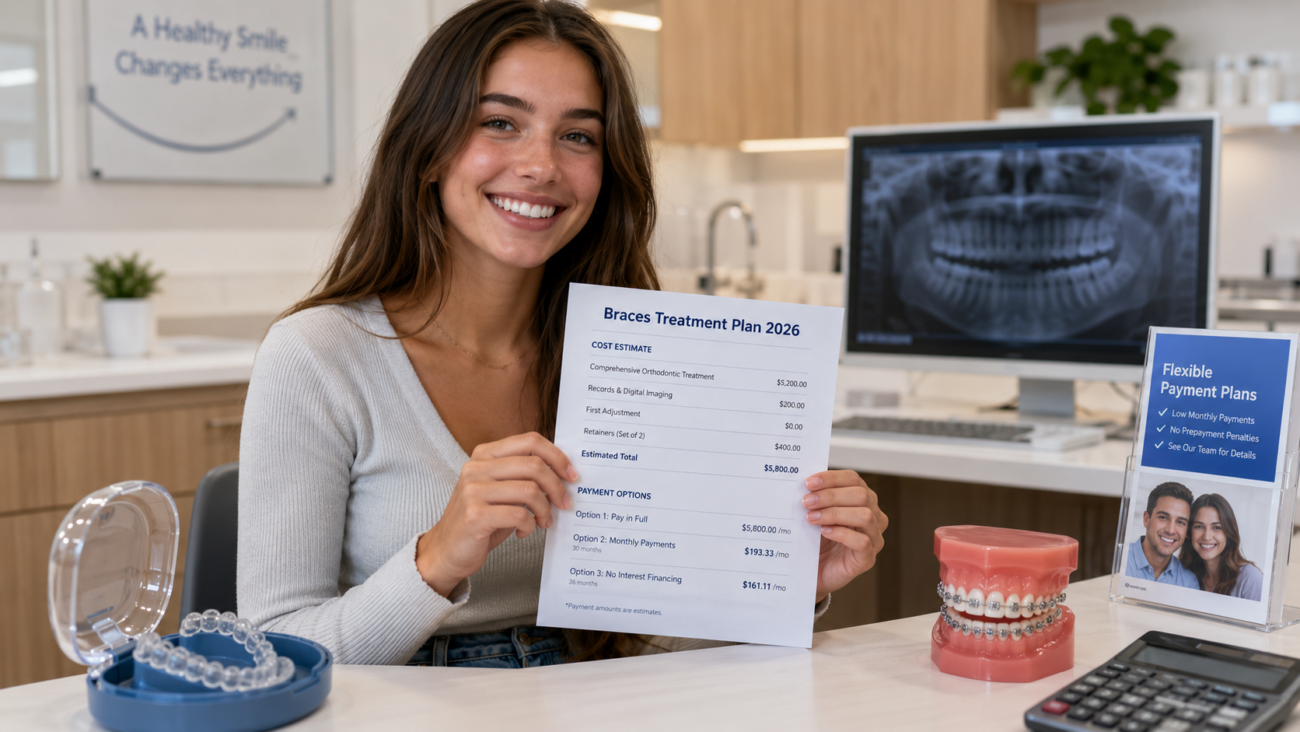
If you are considering transforming your smile this year, you are likely asking yourself a very important question: how much do braces cost without insurance 2026? Navigating the financial side of orthodontic care can feel overwhelming, especially if you lack comprehensive coverage. Many standard dental policies—sometimes casually referred to as tooth insurance—often exclude adult orthodontics or carry strict lifetime maximums anyway.
The good news is that achieving a perfectly aligned tooth and a healthy bite is entirely possible, even if you are paying entirely out of pocket. Let’s explore the Cost of braces without insurance in the United States (2026), break down the various treatment options, and uncover the most effective strategies to make your dream smile affordable.

The Economic Landscape of Orthodontics in 2026
When planning your budget, it helps to understand the average cost of braces with and without insurance 2026. Even with a great insurance plan, most patients still pay a significant portion out of pocket, as insurance usually only covers $1,000 to $2,000 of the total bill.
If you are getting braces without insurance, you are responsible for the entire amount. Due to the impact of inflation on dental procedure pricing, the overall cost of braces has seen a gradual increase over recent years. As a result, the average cost braces without insurance us 2026 generally falls anywhere from $4,500 to $9,000. Your exact cost depends on how severe your dental misalignment is. It also depends on where your orthodontist is located. It depends on the hardware you choose.
Braces Price Comparison: Hardware Breakdown
Not all braces are created equal, and the dental braces price will vary based on the materials and technology used. Here is a detailed braces price comparison to help you weigh your options.
Traditional Metal & Self-Ligating Braces
Despite advancements in clear aligners, metal brackets remain highly effective and budget-friendly.
- Traditional Metal: The average price of traditional metal braces is typically the lowest, ranging from $4,500 to $7,000. They are highly reliable for complex bite issues.
- Self-Ligating Braces: Many patients weigh the cost differences between self-ligating and traditional braces. Self-ligating options (such as Damon braces) use a specialized slide mechanism instead of elastic ties. They usually cost about $500 to $1,000 more than traditional metal.
- But they often need fewer adjustment visits, which can save you time.
Ceramic Braces & Clear Aligners
If aesthetic discretion is a priority, you might be looking closely at an Invisalign vs ceramic braces cost comparison.
- Ceramic Braces: Functioning just like metal braces but using tooth-colored brackets, these usually cost between $5,500 and $8,000.
- Clear Aligners (Invisalign): Custom-fitted, removable plastic trays typically range from $4,000 to $8,000. Because the prices of these two options overlap in 2026, the choice often depends on lifestyle, not budget. (For product and treatment basics, see Invisalign.)
Lingual Braces
For ultimate invisibility, lingual braces are attached to the back of the teeth rather than the front. Because they must be custom-bent and need special training to install, lingual braces for adults cost the most. Prices often range from $9,000 to $13,000.

Watch Out for Hidden Costs
Before signing an agreement, you need to know exactly what your braces cost without insurance 2026 quote actually includes.
Start by asking about comprehensive orthodontic consultation fees. While many clinics offer a free first exam, some may charge $100 to $300. This may cover X-rays, 3D imaging, or molds.
Furthermore, you must carefully review the fine print to identify any hidden fees in orthodontic contracts. Ask your orthodontist if the quoted price covers:
- Emergency visits for broken brackets or snapped wires.
- The removal of the braces at the end of treatment.
- Your first set of post-treatment retainers (which are crucial for keeping your teeth straight).
How to Pay for Orthodontics With No Dental Insurance
Figuring out how to pay for orthodontics with no dental insurance doesn’t require draining your savings account. Orthodontists know their services are an investment. Most offices are willing to work with patients without insurance.
- In-House Payment Plans: The vast majority of practices offer flexible braces payment plans. When shopping around for a doctor, specifically ask if they offer interest-free monthly payment plans for teeth straightening. Spreading a $6,000 bill over 24 months turns an intimidating sum into a manageable $250 a month.
- Upfront Payment Discounts: If you have the savings available, consider negotiating a cash discount with private orthodontists. Many offices will deduct 5% to 10% from your total bill. Pay the full amount upfront in cash or by bank transfer. This saves them credit card fees and admin work.
- Tax-Advantaged Accounts: Utilizing FSAs and HSAs for orthodontic expenses is a highly strategic financial move. By using pre-tax dollars from your Flexible Spending Account or Health Savings Account, you get a discount.
- The discount matches your income tax bracket.
- You often save 20% to 30% overall. (For official rules, see IRS Publication 969 and IRS Publication 502.)
- Dental Savings Plans: You might find yourself wondering, are dental savings plans better than insurance for braces? In many cases, yes. Unlike traditional insurance, a dental savings plan usually has a low annual fee. Traditional insurance often has waiting periods, deductibles, and age limits for orthodontics. It is usually around $100–$200. In return, you get access to pre-negotiated discounts of 15% to 25% off procedures at participating orthodontists. (See an overview from the American Dental Association.)

Budget-Friendly Options and Assistance Programs
If standard private practice rates are still too high, community resources can help make treatment more affordable.
- University Clinics: Dental school clinics can offer discounted orthodontic treatment. This option is a well-kept secret in dental care. Orthodontic residents perform the work under the strict supervision of veteran, board-certified orthodontists. Because it is a learning environment, treatments can take slightly longer, but you can easily save 30% to 50% off standard rates.
- Non-Profit Organizations: Families struggling financially should look into low income orthodontic assistance programs. Organizations like Smiles Change Lives and the Dental Lifeline Network match low-income patients with volunteer orthodontists. This can cut care costs to a small administrative fee.
- Medicaid Limitations: A frequently asked question is, does Medicaid cover braces for adults? Unfortunately, the answer in almost all states is no. Medicaid usually covers orthodontic treatment only for children and young adults under age 21. Even then, it must be medically necessary, not cosmetic. For example, a severe jaw misalignment may affect eating or speaking. (For program basics, see Medicaid benefits.)
The Takeaway
While the cost of braces without insurance in the United States (2026) can be high, it should not stop you. You still deserve a great smile. By comparing hardware options, you can lower costs. Watch for hidden fees. Use tax-advantaged accounts or savings plans. These steps can help you afford treatment. Don’t be afraid to schedule a few free consultations. Compare quotes, ask about flexible payment plans, and find an orthodontist who respects your needs and budget. (For finding a specialist, you can use the American Association of Orthodontists locator.)
